Embracing Social Sustainability: Avoiding Pitfalls That Erode Human Foundations in Business
In the pursuit of true sustainability, social sustainability often takes center stage as the human-centric pillar that ensures businesses don’t just survive but contribute positively to society. This aspect focuses on safeguarding essential human needs—health, education, influence, and security—while preventing practices that undermine them. For companies aiming to build enduring models, dodging this pitfall means rejecting actions that erode societal structures, from exploitative labor to manipulative lobbying. By prioritizing human needs, businesses foster equity, reduce risks, and unlock long-term profits.
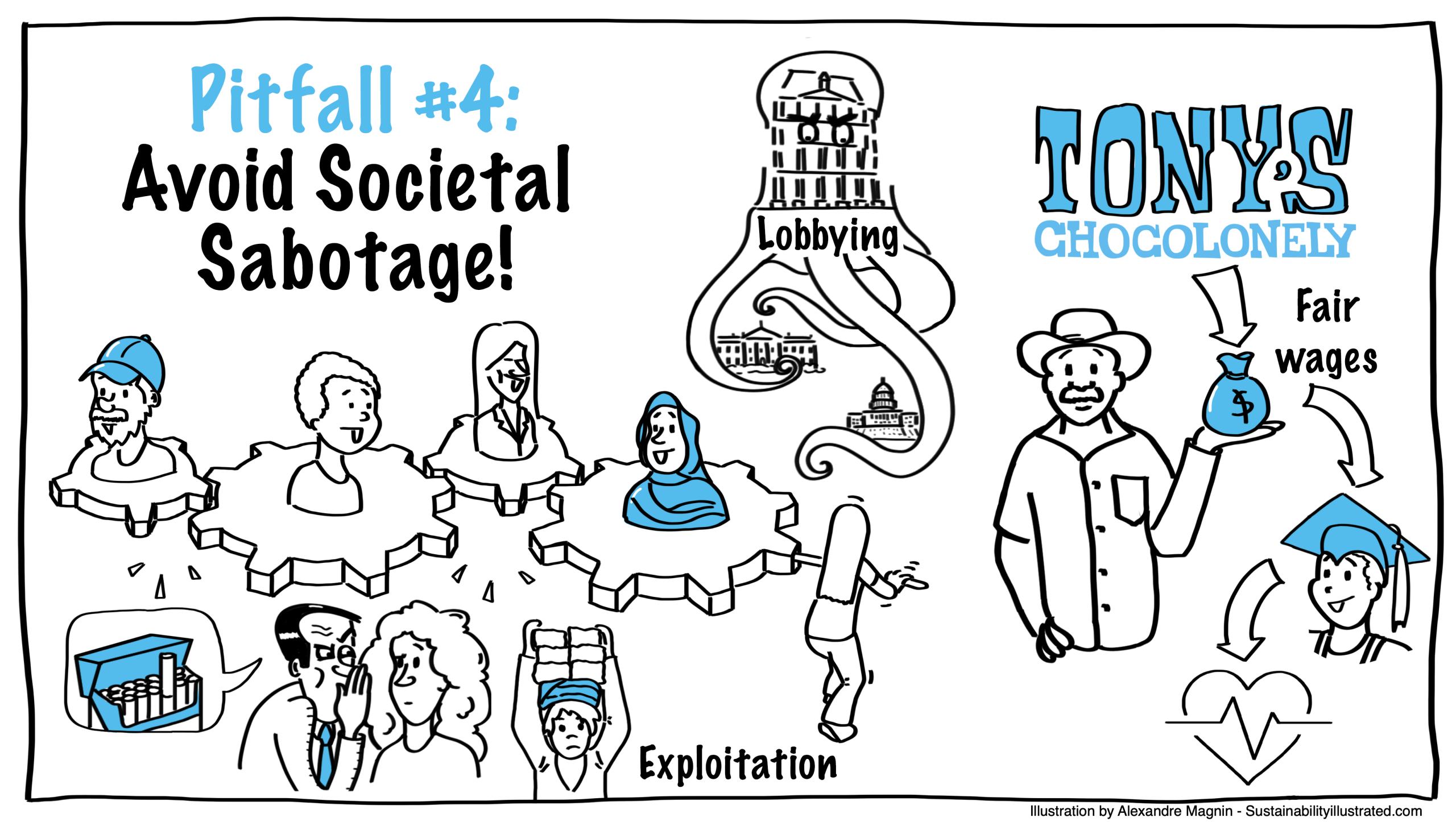
At its core, it demands that operations don’t block equitable access to basics. Lobbying against health-protective policies, such as those in the tobacco or food industries, exemplifies how short-term gains can harm public well-being. Similarly, targeting vulnerable populations with addictive products like alcohol or gambling preys on insecurities, widening inequality gaps. Precarious labor practices, including child labor in supply chains or unfair wages, further dismantle social sustainability by perpetuating poverty and instability. These aren’t just ethical lapses; they’re business vulnerabilities. In a world where consumers increasingly demand transparency—78% prefer brands with strong social sustainability commitments—ignoring this invites boycotts, legal battles, and talent flight.
The good news? Integrating human needs as part of sustainability isn’t sacrificial; it’s strategic. Tony’s Chocolonely demonstrates this brilliantly in the chocolate industry. By paying farmers premiums above market rates, they fund education and health initiatives while eradicating child labor. This builds resilient supply chains, where empowered communities deliver higher-quality cocoa, enabling premium pricing and loyal customers. The ripple effect? Reduced inequality and a brand that stands out in a crowded market, proving social sustainability drives revenue growth.
IKEA scales this even further, embedding social sustainability across its global operations. Sourcing 100% renewable or recycled wood aligns with environmental goals, but their commitment to fair wages and safe conditions for over a million supply chain workers tackles social sustainability head-on. By enforcing ethical standards and investing in worker training, IKEA minimizes turnover, enhances productivity, and mitigates risks from scandals. The outcome: robust profits amid reduced inequality, showing how social sustainability creates a virtuous cycle of trust and efficiency.
Broader frameworks, like the UN’s Sustainable Development Goals, reinforce this: the social aspect of sustainability intersects with economic and environmental pillars, ensuring holistic progress. Companies embracing it report 51-81% higher profits through innovation, like blockchain for transparent labor tracking or partnerships for community education. In contrast, those neglecting human needs as part of their sustainability strategy face escalating costs—from fines for labor violations to lost market share in eco-conscious demographics.
To thrive, businesses must audit dependencies on systems that hinder social sustainability. Start with supply chain mapping: identify exploitation risks and pivot to fair practices. The payoff? A resilient enterprise that not only complies with evolving regulations but leads in a purpose-driven economy. The social aspect of sustainability isn’t optional—it’s the foundation for profitable, positive impact. What’s your company’s step toward it? Share below and join the movement.