Greenwashing: How to Spot Corporate Deception
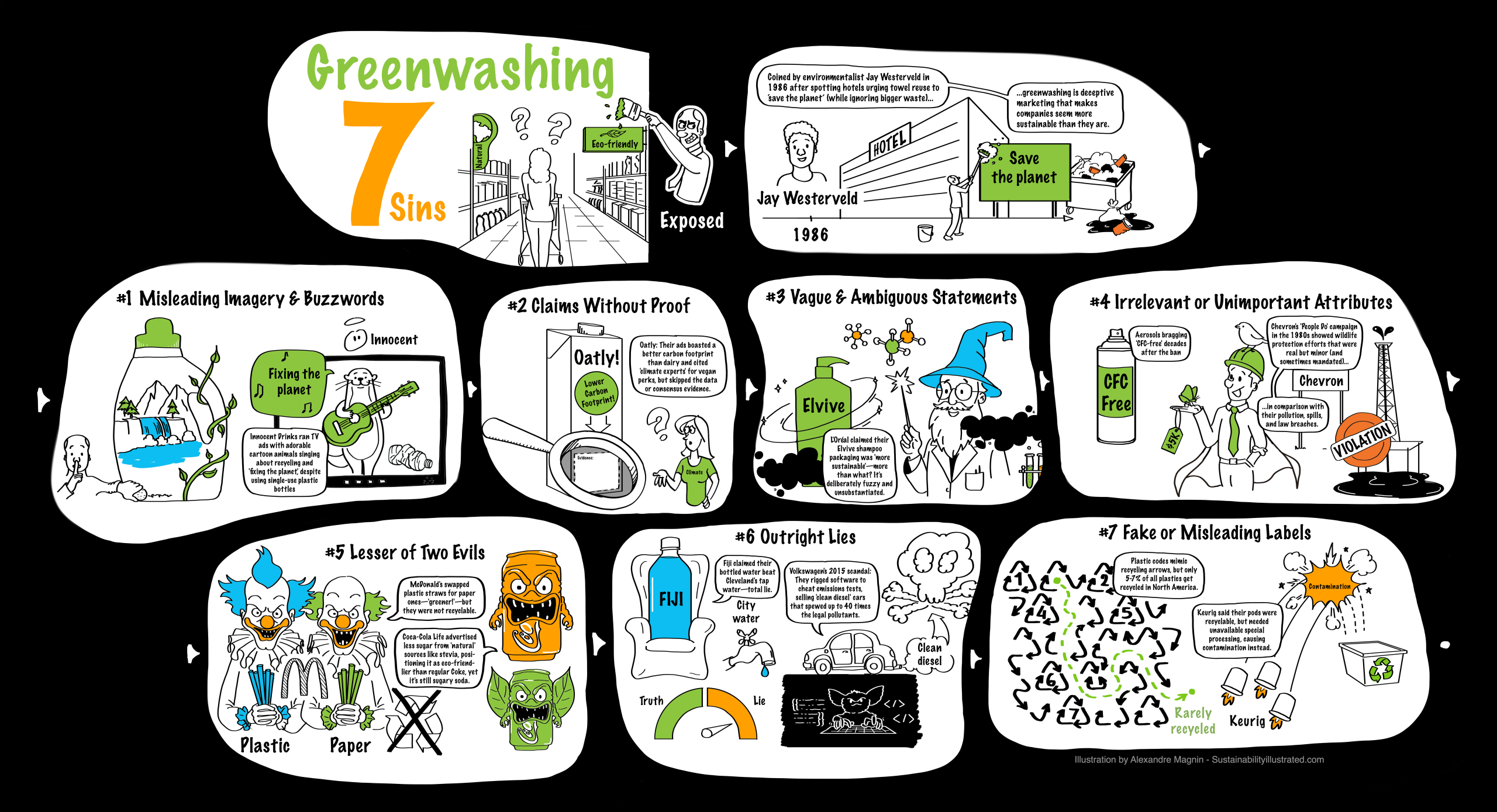
In today’s eco-conscious world, “greenwashing” has become a buzzword for deceptive marketing practices where companies exaggerate or fabricate their environmental credentials to appeal to sustainability-minded consumers. But what is it exactly? Coined in 1986 by environmentalist Jay Westerveld, it refers to misleading claims that make products or brands seem more eco-friendly than they truly are. This post dives into greenwashing tactics and real-world examples, inspired by our latest whiteboard animation video that breaks it all down.
Understanding greenwashing is crucial because it erodes trust and hinders genuine climate action. Companies invest billions in PR to greenwash their image, often prioritizing profits over the planet. This video explores the “Seven Sins of Greenwashing,” a framework highlighting common pitfalls. Let’s unpack a few here to help you avoid falling for these tricks.
Tactic #1: Misleading Imagery and Buzzwords
One of the simplest examples is using vague terms like “natural” or “eco-friendly” paired with leafy visuals. Innocent Drinks, owned by Coca-Cola—a company with a track record of unfulfilled sustainability promises—ran ads with cute cartoon animals promoting recycling, despite relying on single-use plastics.
Tactic #2: Claims Without Proof
Beware unsubstantiated boasts. Oatly‘s ads claimed superior carbon footprints over dairy without solid data, leading to bans in the UK for misleading greenwashing.
Tactic #3: Vague Statements
Cosmetics giant L’Oréal labeled shampoo packaging as “more sustainable” without clarifying comparisons, exemplifying ambiguous statements that confuses consumers.
Tactic #4: Irrelevant Attributes
Chevron‘s 1980s “People Do” campaign touted minor wildlife protections—often legally required—while ignoring massive oil spills, a classic irrelevant tactic.
Tactic #5: Lesser of Two Evils
McDonald‘s paper straw switch seemed eco-progressive, but the non-recyclable material made it another greenwashing example in fast food.
Tactic #6: Outright Lies
Volkswagen‘s “clean diesel” scandal involved cheating emissions tests, emitting 40 times the legal pollutants—a blatant lie.
Tactic #7: Misleading Labels
Keurig‘s “recyclable” pods required unavailable processing, causing contamination and highlighting false endorsement greenwashing.
By recognizing these greenwashing tactics, you empower yourself as a consumer. Our video not only explains what greenwashing is but animates these examples for easy understanding. Watch it now to never be fooled again!
This being said, let’s be careful to not call greenwashing anything a company does aiming at being more sustainable in the future. If they don’t advertise it, it is okay. Let’s give them the benefit of the doubt. It will take time for companies to be truly sustainable.
Ready to dive deeper? Subscribe for more sustainability insights and share your greenwashing stories in the comments. Together, we can demand real change.